Customs
Lei, ʻawa and imu explained
The garland at the door, the kava bowl and the earth oven: the Hawaiian and Samoan customs a luau borrows, and the 1819 meal that started it.
Book the luau ↗Quick answer
A luau borrows from a real Hawaiian feast and from Samoan custom. The lei is a garland given to honour a guest; ʻawa (ʻava in Samoa) is kava, shared in Samoa in a solemn ceremony; and the imu is the Hawaiian earth oven used for feasts. The feast itself dates from 1819, when King Kamehameha II shared a meal with women and so broke the old eating rules. A dinner show echoes these customs; it does not reproduce them.
The feast before the show
In old Hawaiʻi, the kapu system kept men and women apart at meals, and some foods were forbidden to commoners and to women. In 1819 King Kamehameha II ate with the women, the kapu fell, and messengers carried the news that eating was now free. Feasts followed: smaller dinners called pāʻina and larger ones called ʻahaʻaina. The name lūʻau comes from young taro leaves, cooked into a stew served at these gatherings, and it was in print by 1856. Food was traditionally laid on mats on the floor and eaten by hand, with poi made from taro root.
The lei
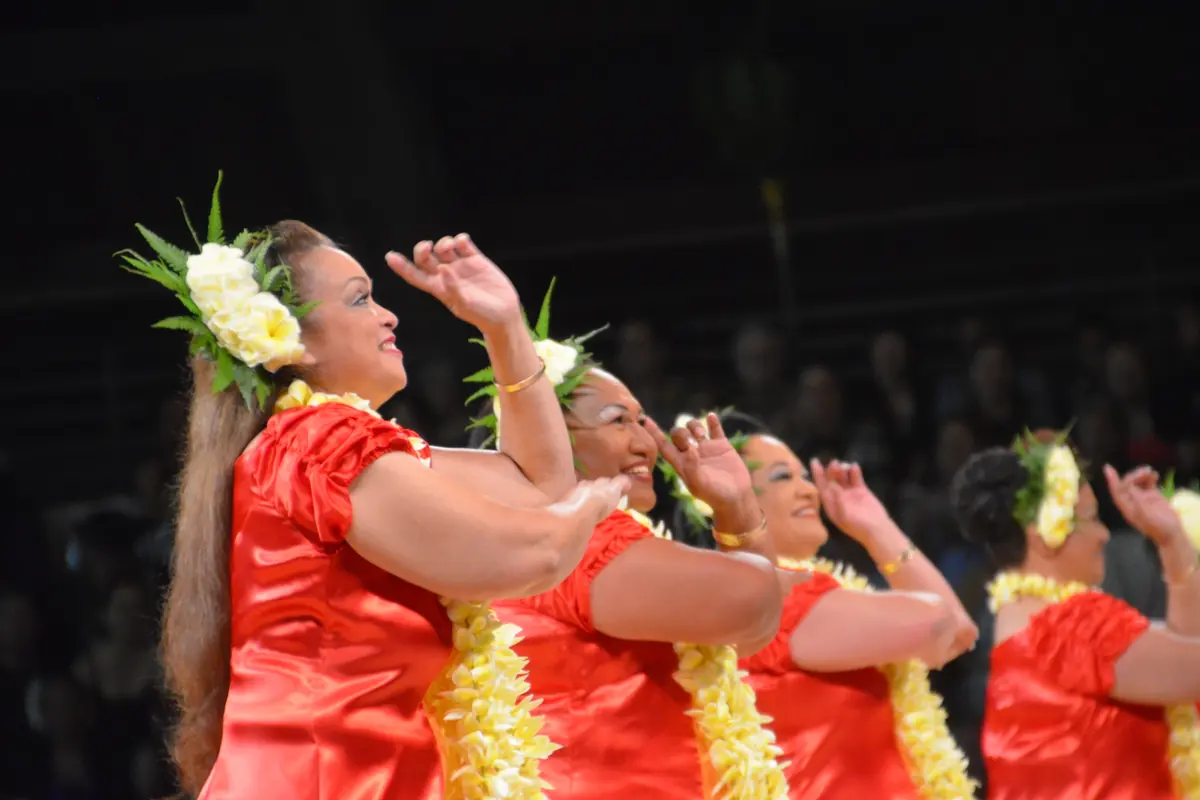
A lei is a garland, most often of flowers, leaves, ferns, vines or seeds, though shells and feathers are used too. Native Hawaiians brought the custom with them across the Pacific, and lei once marked rank and royalty as well as honour. They are given for peace, love, honour or friendship, and to loved ones who are leaving, and the habit of placing one on visitors arriving in Hawaiʻi made them known across the United States. Lei can be braided, twisted, knotted or strung, each method with its own Hawaiian name, and Hawaiʻi celebrates Lei Day on the first of May. At a luau the lei at the door is a welcome.
ʻAwa and the Samoan ʻava ceremony
Kava is a plant of the pepper family, and the drink made from its root is shared across Polynesia, Micronesia and Melanesia. In Hawaiian it is ʻawa; in Samoan, ʻava. In Samoa the ʻava ceremony is one of the most important customs, a solemn ritual for marking great occasions, including the bestowal of chiefly matai titles. It always includes speeches and oratory, and close attention is paid to who drinks in what order. The drink is mixed in a tanoa, a wooden bowl on short legs, often carved from the hard, reddish wood of the ifilele tree.
ʻAwa in old Hawaiʻi
In Hawaiʻi, kava cultivars had their own names and their own standing. The chiefs of precolonial Hawaiʻi prized a variety called Moʻi, and another, Hiwa, was held in special reverence. Hula has a direct tie to the drink: ʻawa, especially of the Hiwa variety, was offered to the gods of hula in return for knowledge and inspiration, and a hula prayer asks for knowledge from kava offerings. You will not be served ʻawa at a dinner show; it belongs to the world the dances come from rather than to the meal.
The imu, the earth oven
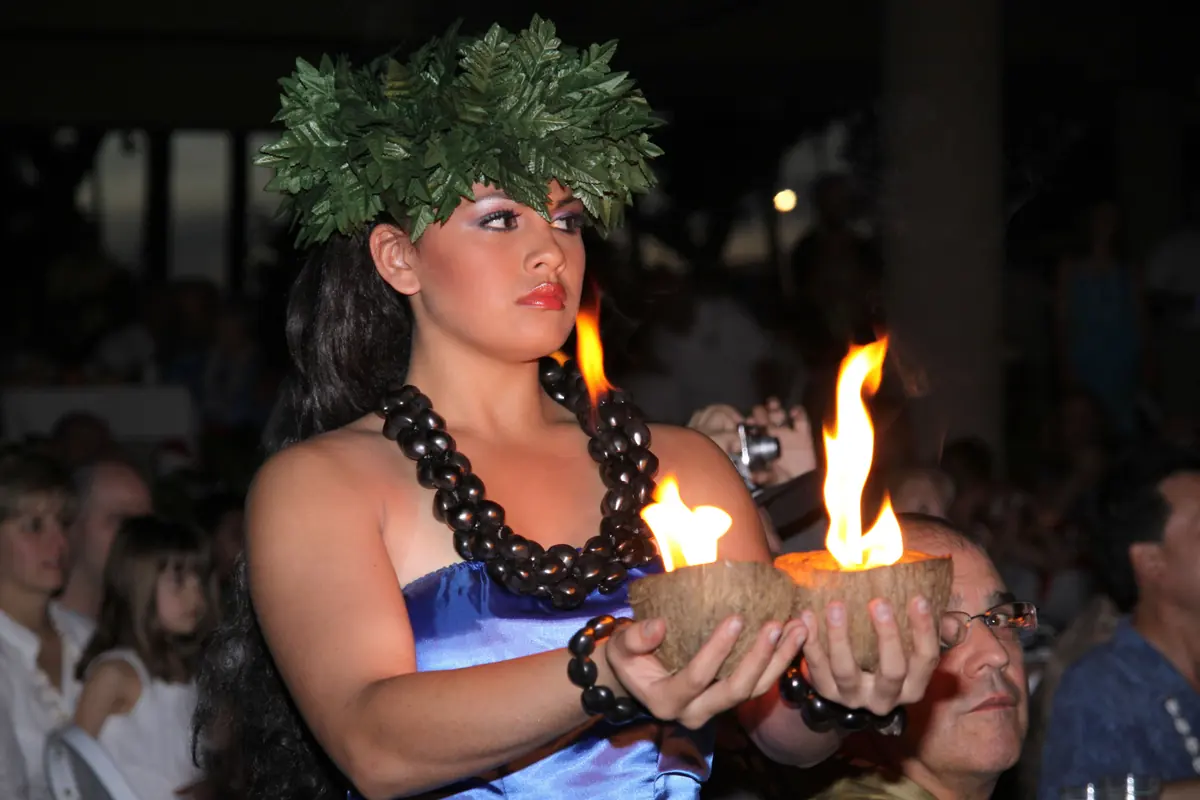
The imu is the Hawaiian earth oven, a pit dug two to four feet deep. Porous rocks are heated and laid at the bottom, banana stumps and leaves go on top, then the food, then more leaves, and the whole thing is covered so no steam escapes. The food cooks for several hours. Because it took so much work, an imu was made for special events or ceremonies. Cooking this way is called kālua. Samoa's umu uses the same method but is usually built above ground, and there it remains an everyday way of roasting food rather than a feast-day one.
What a dinner show keeps, and what it doesn't
A Polynesian dinner show in Florida is entertainment, not a ceremony. The lei at the door is a real custom, offered as a welcome. The food is served from a kitchen, not lifted from a pit, and the menu changes, so do not expect any particular dish. Kava ceremonies are not part of the evening. What the show does carry is the spirit of the ʻahaʻaina, a large shared meal with music and dance, and the Samoan arts that have joined it, above all the fire knife. Knowing the customs behind it makes the evening richer without asking it to be something it is not.
Sources